MICS6814 3-in-1 Gas Sensor Breakout (CO, NO2, NH3)
Measure changes in the concentration of gases including carbon monoxide (CO), nitrogen dioxide (NO2), and ammonia (NH3) with this Breakout Garden compatible I2C breakout.
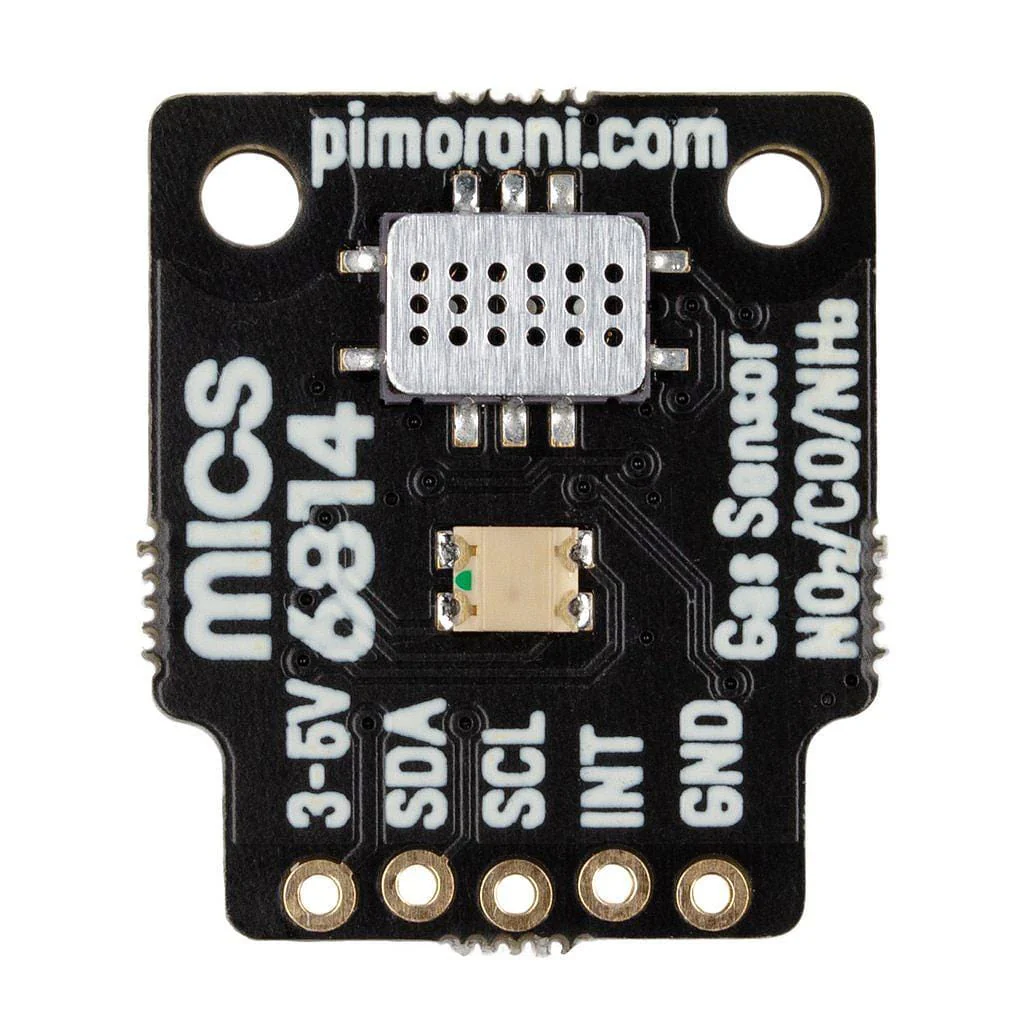
The MICS6814 sensor comprises three semiconductor gas sensors in a single package and can detect three different groups of gases that are referred to in the datasheet as reducing, oxidising, and NH3. The major gases/vapours that the sensor detects are: carbon monoxide (reducing), nitrogen dioxide (oxidising), and ammonia (NH3), but it is also sensitive to others, including hydrogen, ethanol, and hydrocarbons.
It can be used to make qualitative measurements of changes in gas concentrations, so you can tell broadly if the three groups of gases are increasing or decreasing in abundance. Without laboratory conditions or calibration, you won't be able to say "the concentration of carbon monoxide is n parts per million", for example. There's more info about the MICS6814 sensor and how it works in the Getting Started with Enviro+ tutorial.
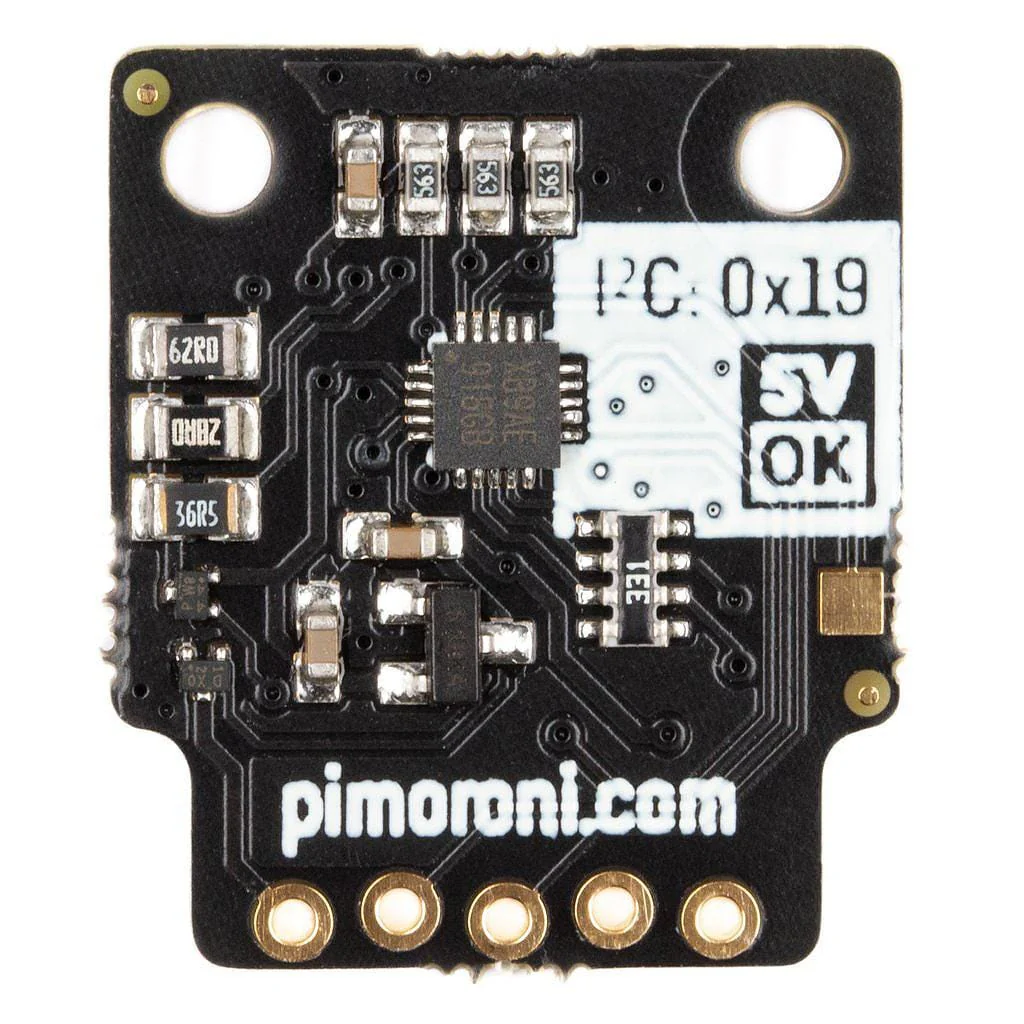
This breakout uses a Nuvoton microcontroller which handles the I2C and analog-digital conversion, as well as controlling the sensor's inbuilt heater and the user controllable RGB LED. The LED could be used to indicate when the sensor is running or to notify you visually of gas concentration changes. It's Breakout Garden compatible, which means you can use it with any of our Breakout Garden HATs and pHATs - no soldering required!
It's useful for incorporating into indoor and outdoor air quality monitoring systems, especially if you're interested in monitoring agricultural and vehicle pollution levels.
Check out our full range of Breakout's and Breakout Garden's here
Features
- MICS6814 analog gas sensor (datasheet and FAQ)
- Nuvoton MS51XB9AE MCU
- RGB LED
- 2x M2.5 mounting holes
- I2C interface, with a default address of 0x19.
- 3V to 5V compatible
- Reverse polarity protection
- Raspberry Pi-compatible pinout (pins 1, 3, 5, 7, 9)
- Compatible with all models of Raspberry Pi.
- Python library
- Schematic
Kit includes
- MICS6814 Gas Sensor Breakout
- 1x5 straight male header
- 1x5 right-angle female header
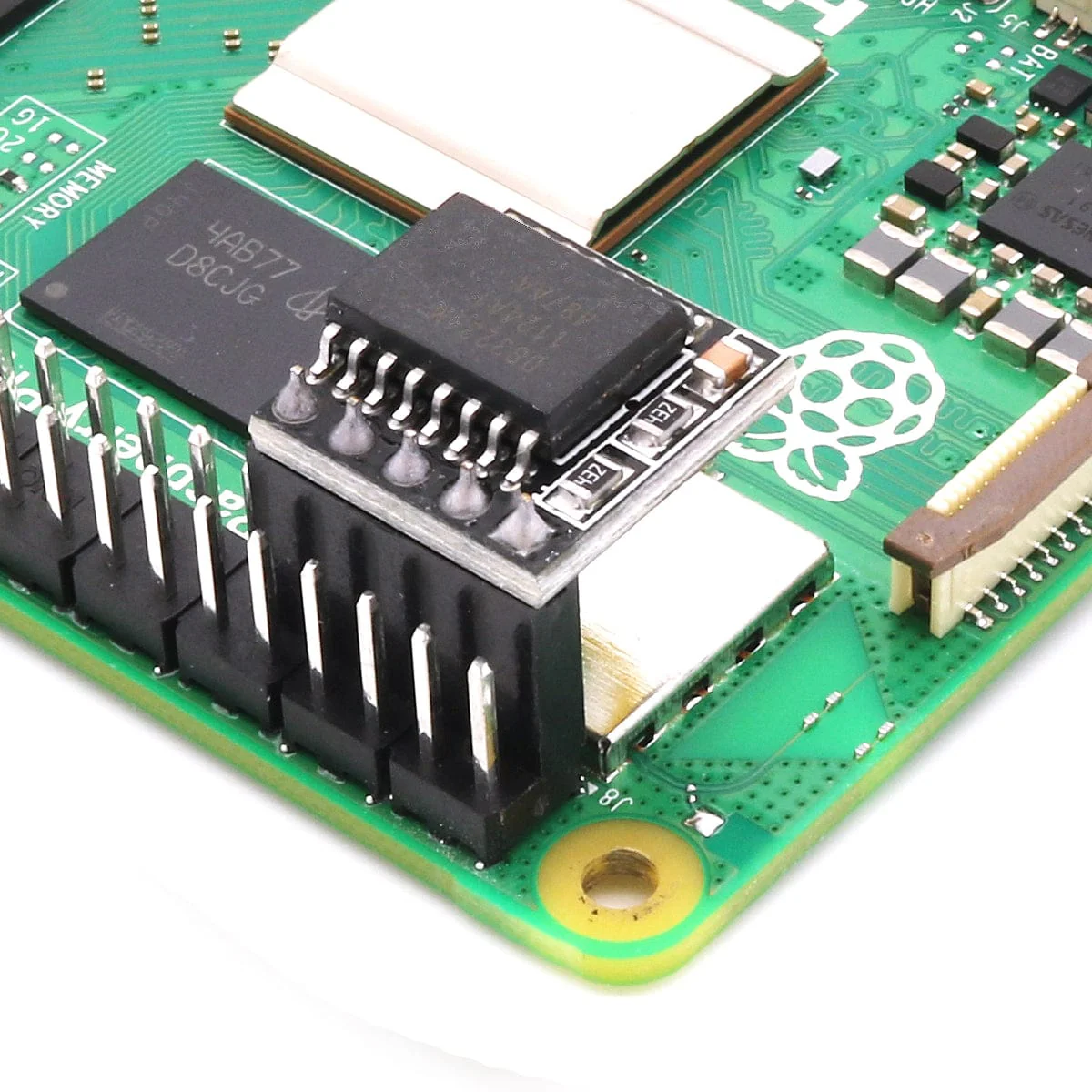
We've designed this breakout board so that you can solder on the piece of right-angle female header and pop it straight onto the bottom left 5 pins on your Raspberry Pi's GPIO header (pins 1, 3, 5, 7, 9).
Software
We've put together a Python library together with examples showing you how to get readings from the sensor and control the LED.
Notes
- Dimensions: approx 23 x 20 x 4mm (L x W x H)
Original: $23.10
-65%$23.10
$8.09More Images
MICS6814 3-in-1 Gas Sensor Breakout (CO, NO2, NH3)
Measure changes in the concentration of gases including carbon monoxide (CO), nitrogen dioxide (NO2), and ammonia (NH3) with this Breakout Garden compatible I2C breakout.
The MICS6814 sensor comprises three semiconductor gas sensors in a single package and can detect three different groups of gases that are referred to in the datasheet as reducing, oxidising, and NH3. The major gases/vapours that the sensor detects are: carbon monoxide (reducing), nitrogen dioxide (oxidising), and ammonia (NH3), but it is also sensitive to others, including hydrogen, ethanol, and hydrocarbons.
It can be used to make qualitative measurements of changes in gas concentrations, so you can tell broadly if the three groups of gases are increasing or decreasing in abundance. Without laboratory conditions or calibration, you won't be able to say "the concentration of carbon monoxide is n parts per million", for example. There's more info about the MICS6814 sensor and how it works in the Getting Started with Enviro+ tutorial.
This breakout uses a Nuvoton microcontroller which handles the I2C and analog-digital conversion, as well as controlling the sensor's inbuilt heater and the user controllable RGB LED. The LED could be used to indicate when the sensor is running or to notify you visually of gas concentration changes. It's Breakout Garden compatible, which means you can use it with any of our Breakout Garden HATs and pHATs - no soldering required!
It's useful for incorporating into indoor and outdoor air quality monitoring systems, especially if you're interested in monitoring agricultural and vehicle pollution levels.
Check out our full range of Breakout's and Breakout Garden's here
Features
- MICS6814 analog gas sensor (datasheet and FAQ)
- Nuvoton MS51XB9AE MCU
- RGB LED
- 2x M2.5 mounting holes
- I2C interface, with a default address of 0x19.
- 3V to 5V compatible
- Reverse polarity protection
- Raspberry Pi-compatible pinout (pins 1, 3, 5, 7, 9)
- Compatible with all models of Raspberry Pi.
- Python library
- Schematic
Kit includes
- MICS6814 Gas Sensor Breakout
- 1x5 straight male header
- 1x5 right-angle female header
We've designed this breakout board so that you can solder on the piece of right-angle female header and pop it straight onto the bottom left 5 pins on your Raspberry Pi's GPIO header (pins 1, 3, 5, 7, 9).
Software
We've put together a Python library together with examples showing you how to get readings from the sensor and control the LED.
Notes
- Dimensions: approx 23 x 20 x 4mm (L x W x H)
Product Information
Product Information
Shipping & Returns
Shipping & Returns
Description
Measure changes in the concentration of gases including carbon monoxide (CO), nitrogen dioxide (NO2), and ammonia (NH3) with this Breakout Garden compatible I2C breakout.
The MICS6814 sensor comprises three semiconductor gas sensors in a single package and can detect three different groups of gases that are referred to in the datasheet as reducing, oxidising, and NH3. The major gases/vapours that the sensor detects are: carbon monoxide (reducing), nitrogen dioxide (oxidising), and ammonia (NH3), but it is also sensitive to others, including hydrogen, ethanol, and hydrocarbons.
It can be used to make qualitative measurements of changes in gas concentrations, so you can tell broadly if the three groups of gases are increasing or decreasing in abundance. Without laboratory conditions or calibration, you won't be able to say "the concentration of carbon monoxide is n parts per million", for example. There's more info about the MICS6814 sensor and how it works in the Getting Started with Enviro+ tutorial.
This breakout uses a Nuvoton microcontroller which handles the I2C and analog-digital conversion, as well as controlling the sensor's inbuilt heater and the user controllable RGB LED. The LED could be used to indicate when the sensor is running or to notify you visually of gas concentration changes. It's Breakout Garden compatible, which means you can use it with any of our Breakout Garden HATs and pHATs - no soldering required!
It's useful for incorporating into indoor and outdoor air quality monitoring systems, especially if you're interested in monitoring agricultural and vehicle pollution levels.
Check out our full range of Breakout's and Breakout Garden's here
Features
- MICS6814 analog gas sensor (datasheet and FAQ)
- Nuvoton MS51XB9AE MCU
- RGB LED
- 2x M2.5 mounting holes
- I2C interface, with a default address of 0x19.
- 3V to 5V compatible
- Reverse polarity protection
- Raspberry Pi-compatible pinout (pins 1, 3, 5, 7, 9)
- Compatible with all models of Raspberry Pi.
- Python library
- Schematic
Kit includes
- MICS6814 Gas Sensor Breakout
- 1x5 straight male header
- 1x5 right-angle female header
We've designed this breakout board so that you can solder on the piece of right-angle female header and pop it straight onto the bottom left 5 pins on your Raspberry Pi's GPIO header (pins 1, 3, 5, 7, 9).
Software
We've put together a Python library together with examples showing you how to get readings from the sensor and control the LED.
Notes
- Dimensions: approx 23 x 20 x 4mm (L x W x H)